Mastery using the Breath and Intention
… as the latest science clarifies the brain/mind’s connection with the quantum field
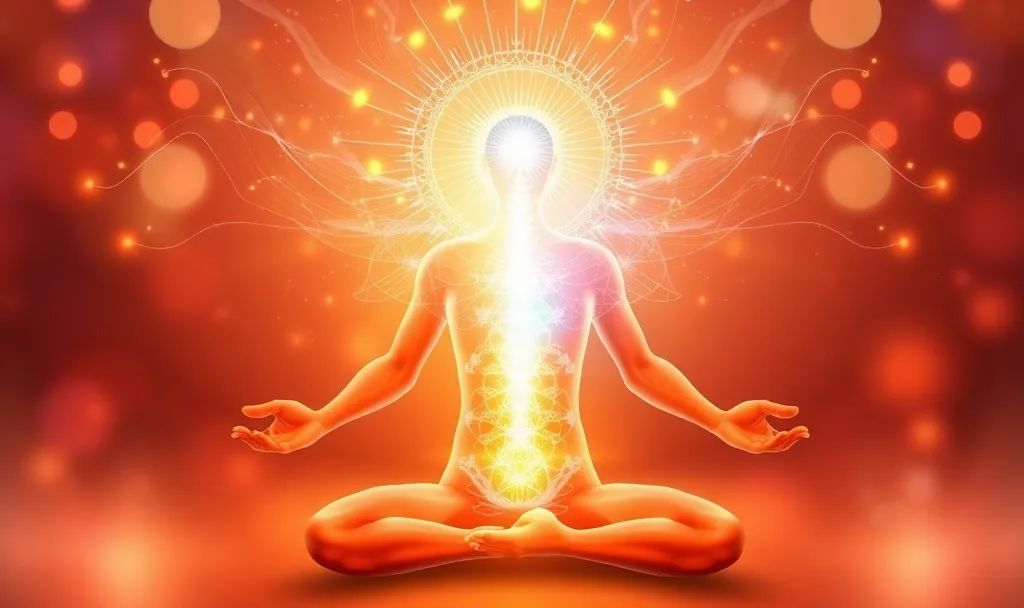
This post expands the dharma wanderer’s sharing of practice methods. While in graduate training in clinical psychology at the University of Illinois at Champaign-Urbana, he received training by master practitioners of cognitive behavior therapy. This clinical supervision was presented as a coherent system for diagnosis and therapy. This post goes significantly beyond those techniques by adapting ancient and contemporary energetic, relaxation and healing practices for the dissolution of suffering. It expands the clinical paradigm from learning and conditioning to a more universal paradigm that includes vibratory connections with the quantum field.
The dharma wanderer’s most recent post identified three key themes in the tapestry of his life. These explained his deep interest in and appreciation for evidence-based research on health, wellness, well-being, longevity and healthspan. That post shared three sources of evidence based information the dharma wanderer relies on for sustaining excellent health.
There is a fourth theme…
Q1: What’s the fourth theme?
Something so simple it is regularly taken for granted by most beings: the breath.
Q2: Why is the BREATH significant?
Ahhhhh, so many reasons. It is the first thing we do when we come into this world and the last thing we do when we leave it. Most everything between those two markers of our lives is in one of three breathing states: unaware breath, mindful breath and regulated breath.
Regulating the breath gives practitioners deeper access to their brain/mind.
Controlling the breath’s inhale, pause and exhale builds coherence between brain/mind and body. This enables communication between body/mind/breath and the surrounding quantum field.
Q3: Huh? What do you mean… the surrounding QUANTUM FIELD?
The latest science clarifies this possibility. Check out this 24 minute video:
Breath is not Air — It’s the interface to Reality. The video covers a lot of content
This Perplexity.AI query summarizes the video’s content.
Q4: What is the history of your interest in the BREATH?
The dharma wanderer has a long history of receiving training in breath awareness and control. He has explored multiple breathing practices, aka pranayama. The following were his most helpful early developmental experiences:
- 1973 — Clinical psychology practicum supervision on progressive relaxation training for chronic tension and as the initial component in systematic desensitization for conditioned anxiety.
Relaxation Practice 1: Deep inhale → sequentially tense each major muscle group while holding the breath → exhale slowly and relax each successive muscle group → shift focus to breath awareness at the end for deep relaxation
- 1979 — Kundalini yoga: personal training in rapid diaphragmatic breathing, a pranayama technique called breath of fire. This technique physically stimulates upward movement of the cerebrospinal fluid throughout the brain. This washing of brain cells with cerebrospinal fluid clears out cellular waste products and debris, leaving the brain/mind alert and aware.
Energetic Practice 1: With palms clasped at the lower abdomen [dantien], expand lower abdomen for inhale → strongly pull lower abdomen in for exhale. Repeat vigorously.
Develop ability to do 108 rapid vigorous breaths. At end, use intention to pull stored chi energy up the spine, over the crown chakra, through the heart center, down the front of the body to the lower abdomen [dantien], and into the clasped hands.
This Perplexity.AI query explains
benefits, cautions and how newbies might begin a breath of fire practice. - 1981 — Training in extended exhalation practice developed by
Jack Schwarz.Relaxation Practice 2: Background and technique summary
Most breathing practices emphasize relaxation benefits, but there is a strategically important potential benefit when INTENTION is combined with breath.
Q5: How does INTENTION fit into breathing practices?
The repeated expression of intention in rhythm with breath sends a vibratory signal to the surrounding quantum field. This has three effects: tuning, embodiment, manifestation.
Tuning
Pairing intention with breath tunes the brain/mind to receive momentary signals from the field that provide guidance for next steps.
This video clip explains the coherence between NDE reports and Tibetan BARDO.
Embodiment
Repeated expression of intention deepens embodiment. This increases behavioral alignment.
Embodiment Practice: Pair exhalation with phrases such as letting go of… and cultivating kindness, compassion, equanimity.
Manifestation
Material goals can be supported using the
R4B Method, while attachment is dissolved via relaxation and embodiment practices.
Q6: How does all this fit into HEALING?
- Incidental healing arises as suffering dissolves.
- Intentional healing can be cultivated using
R4B sentence stems and
visualization. - Hands-on energetic intention may be applied above the body.
May each reader explore the benefits of these practices for themselves and those they care about.
🙏💕🌎